*Not really, there's too many projects as is.
Rendering Engine
Rendering engine with a showcase app

This is my individual final project for my undergraduate degree in Software Engineering, which I graduated in 2026. It is made using C++, OpenGL 4.6 and GLFW, with Dear Imgui for the interface, TinyObj for importing models, and STBI for importing environment maps. It supports deferred pipelines using a fluent API, designed to be as generic as possible, though some shortcuts were made towards the end, and some important features are missing. It is accompanied by an environment-driven sandbox app that is highly customisable and implements a complex deferred pipeline.
It aims to achieve most of its visual fidelity from environmental sources, which was defined, in the scope of this project, as anything outside of the model itself or related texture data. Because of this, no material textures are being utilised, meaning roughness, albedo and other related properties are uniform. The pipeline uses a specular-diffuse reflectance model alongside a screen-space ambient occlusion pass, with the diffuse being Lambertian shading and the specular being a blend of the prefiltered environment map and the environment map itself, which improved the appearance of the prefiltered environment map at low roughness.
The normal smoothing is achieved by reimporting the model with averaged normals. The environment maps are imported with equirectangular projection and the prefiltered and irradiance maps are created when the environment map is loaded. Ambient occlusion is not prebaked but is done in real-time in screen-space.
The custom engine exposes a fluent API and has a very strict enforcement of backend, engine and application layers, helping to keep it as generic as possible. The full codebase is available on GitHub for review.
My SkillsBuilder Journey
Gamified web app for learning skills
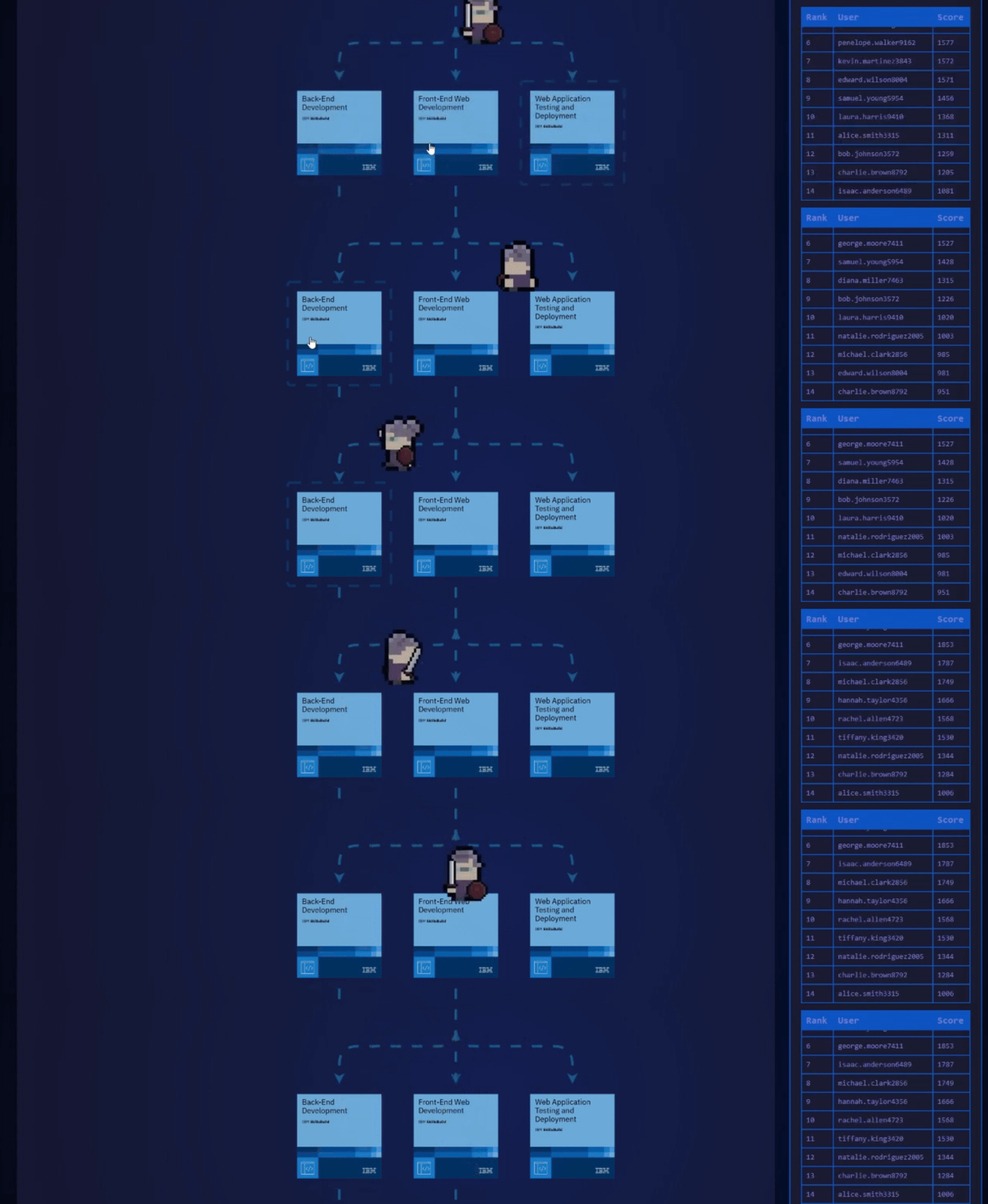
In 2025, we were tasked with creating a gamified web app at university which would, in theory, be integrated with IBM SkillsBuild. However, we did not have access to an API, so it only simulates integration with SkillsBuild on a very basic level.
We had a team of 5 people and had two 4-week sprints to complete this. We used Scrum to manage our communication and developed the scope of the project using user stories. We allocated work by user story, and kept a strict 'Definition of Done' which had to be met before any story was marked as completed.
I was allocated the following features:- Interactive Learning Tree
- Customisable Avatars
- Displaying and Equipping Items
In addition, I took the lead in development of the backend and ensured that there was technical consistency, as well as handling major merge conflicts from other members. I was also responsible for making the app more robust, so I added in-depth validation messages and feedback for the user. Out of the 271 commits in the project, I authored 165.
We decided to take 'Gamification' quite seriously and take inspiration from video game conventions, using Pokemon-style quiz encounters, and RPG-esque quests, loot, and movement.
Users can change their avatar character, which is fully animated and can wear different equipment. They can unlock equipment from completing quests, as well as consumables, which they can use in competition with others on the leaderboard, using the unique point-scoring system in the quiz encounters. There is a detailed feature list which you can find on the GitHub repo.
The goal was not to replace IBM SkillsBuild but to supplement it with a tool that engages users and marks their progress in a more interesting way.
Landscaping Experiment
Over-engineered adaptive landscape material
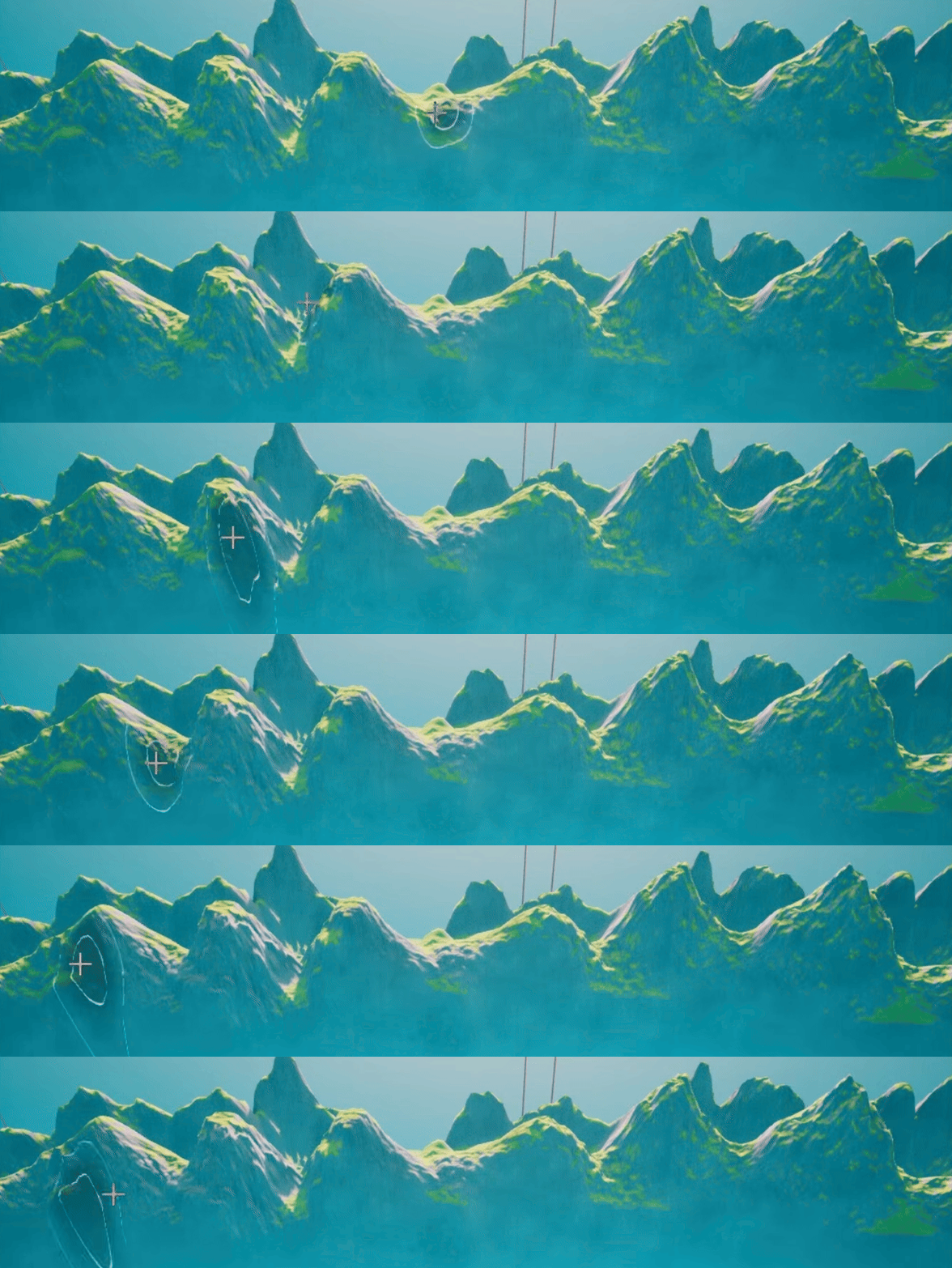
This experiment from 2026 was an attempt at finding a balance between automation and control in landscape painting. It uses noise to break up patterns by alternating terrain textures and to transition between layers, and it uses macro variation and a distance fade (which affects texture variation). Where both stone and grass are present, the chosen material is decided by the slope, taking layer weights into account. A noise-based transition is used to form the edges around the material, rather than using a linear blend. A visual breakdown of the material is shown at the end of the YouTube footage.
Shoddy Architect
An experimental sandbox prototype for destroying shapes
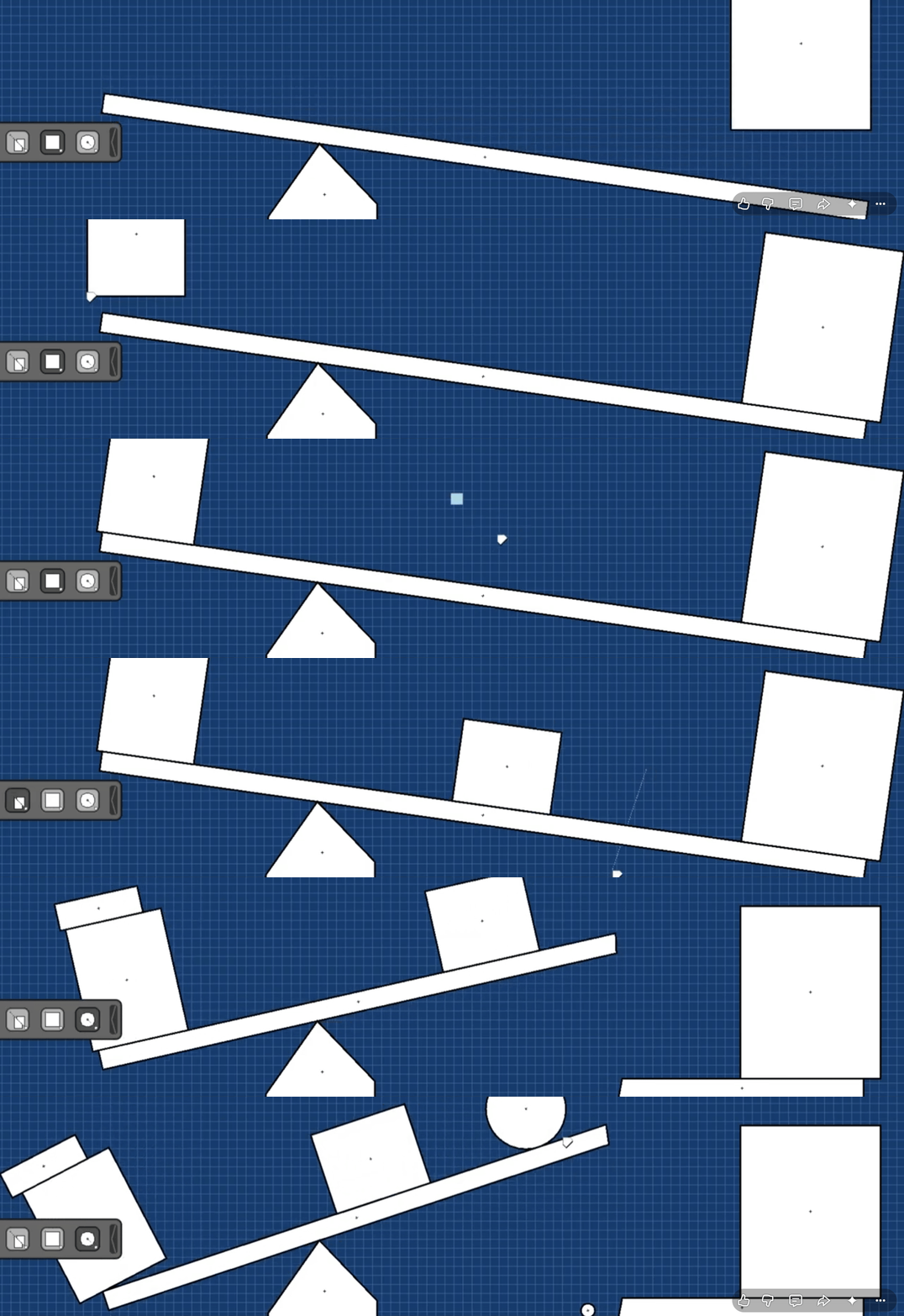

A prototype created in 2025 as the result of experimenting with Godot's 2D physics system to implement procedural destruction. The way that destruction has been implemented works as a solid base for implementing points of impact and explosions. The slicing is simply a proof of potential.
All shapes are converted to polygons which can be separated with lines to form the start of new physics objects. Mass is calculated as being equal to area, and centres of mass are calculated by finding the centroid of a simple polygon. Some calculations are simplified by the fact that shapes are always convex in the current version.
The size of the window is adjustable and physically interacts with the objects when it changes. This is not demonstrated in the YouTube footage. I strayed from allowing the player to snap shapes to a grid because I found fun in messy and unstable structures.
Factorium
Simple but satisfying factory-builder
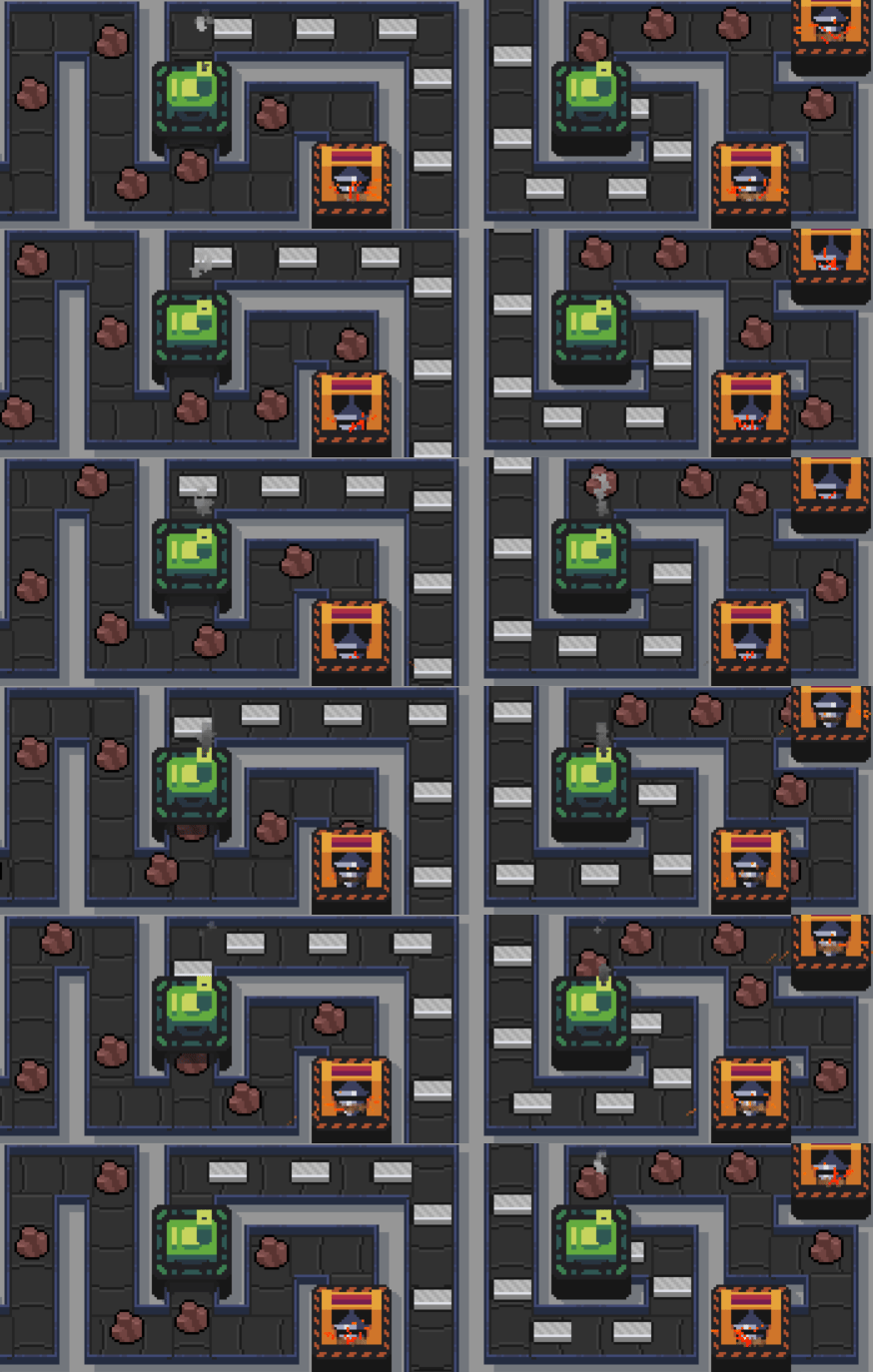
A simple prototype, made in 2024, for what could be a satisfying but not particularly unique factory builder. Started early in the year and then revisited to polish much later. The machine assets are heavily modified from an asset pack and the music is from bensound.com, but the items and conveyor belt assets were made from scratch, as well as everything else.
Because I was planning on making this game web-playable, it is coded in gdscript; Godot 4 mono cannot export to web.
Machine behaviour and animation is synced through a singleton that uses 'ticks' (which occur 11.4 times every second in this case, to match the soundtrack with 114 BPM). Both machines have an animation cycle of 12 ticks. The conveyor belts are animated with a scrolling texture shader that matches the tick speed without having behaviour linked to ticks.
Godot's signal system lent itself well for this implementation, since each game object can connect to the singleton and be notified every tick, as an even cheaper alternative to doing behaviour every frame.
As for the mechanics showed in the prototype, you can use either your mouse or keyboard keys to select items from the build menu or press TAB to toggle its visibility. Conveyors should automatically be connected, but you can manually modify connections by dragging your cursor from an input location to an output location.
A miner (orange machine) has no requirements and produces one piece of ore every 24 ticks. A smelter (green machine) requires one piece of ore to produce one metal bar, and does so every 12 ticks. It can store up to 2 pieces of ore before voiding any other input. If an item other than ore is put into a smelter, it is disabled temporarily, resuming after it receives no incorrect items for a while.
A conveyor belt tile takes 1 second to transport an item from one end to another and there is no limit on the number of items per conveyor.
Robutler
High-speed grappling hook platformer
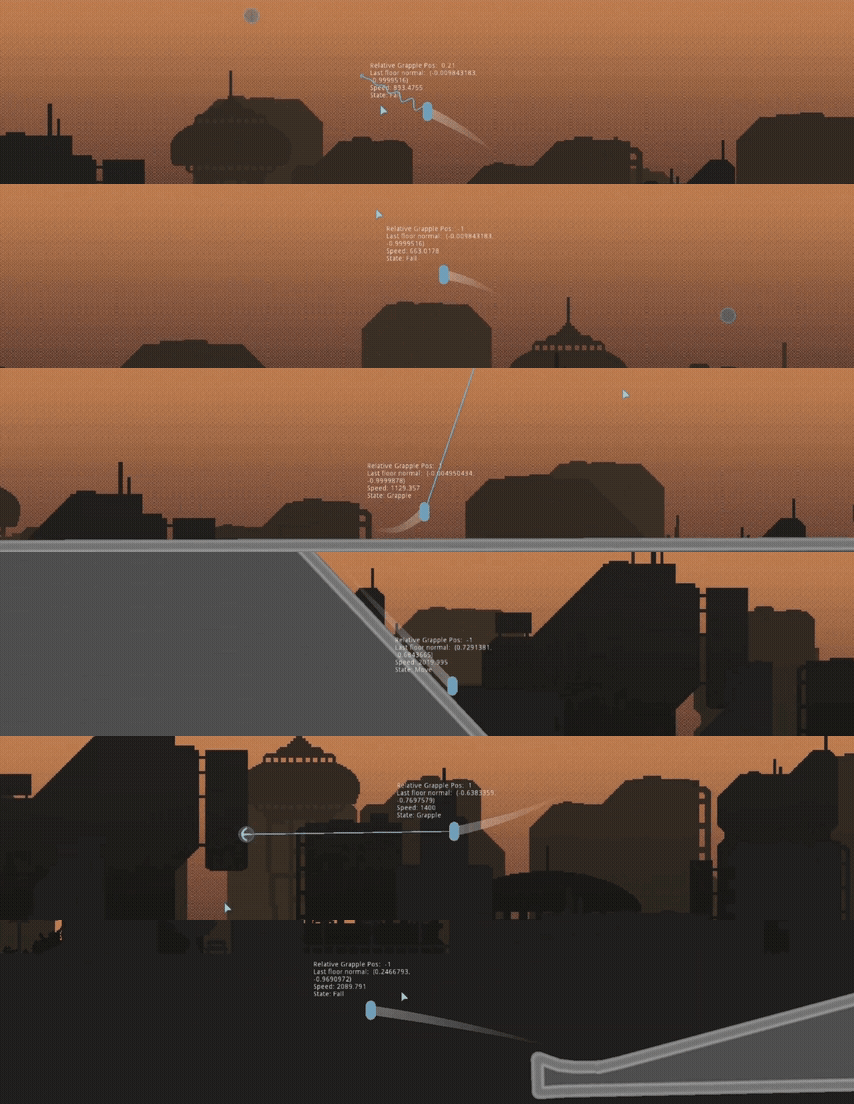
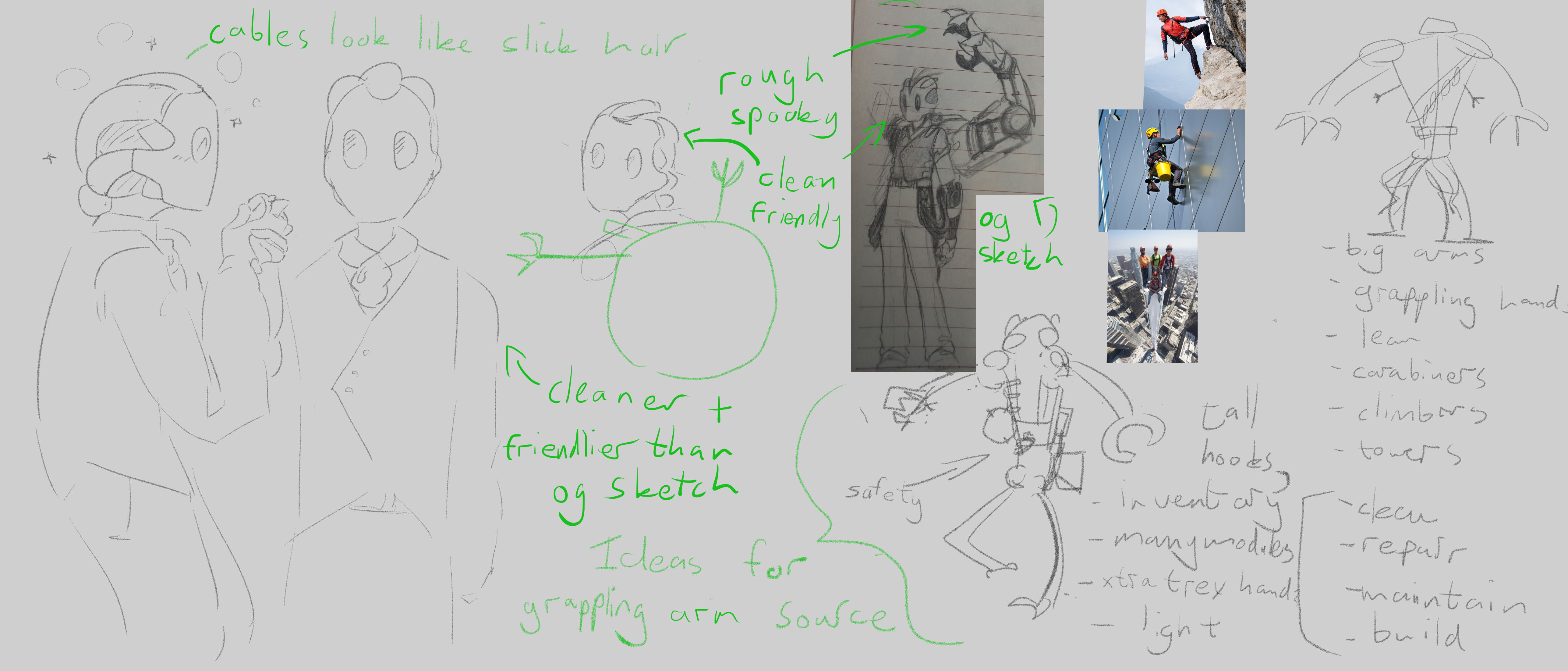
This was another ambitious project from 2022 that I conceptualised with Mellokhai, who is an artist.
He provided some character concept sketches.
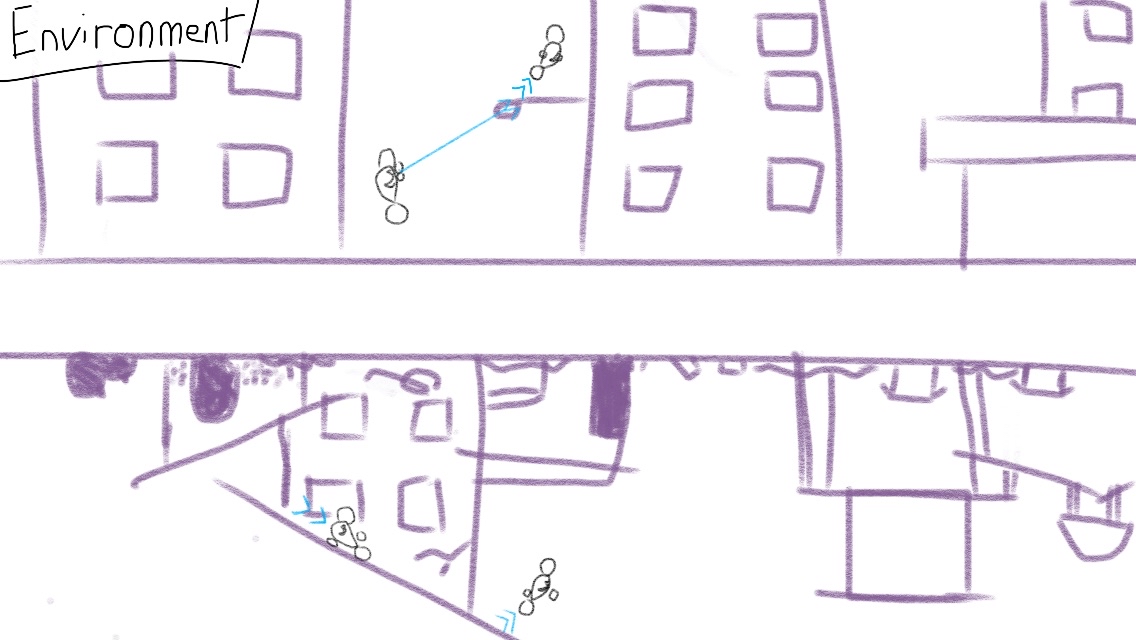
I did some of my own rough sketches to act as an aid when explaining ideas regarding the environment, which is a city with an upside-down version of it underneath. Mechanically, these two sides would play completely differently, because the upside-down is more like slums where hostile robots reside and there are slanted roofs, and the player's gravity does not change direction when switching sides.
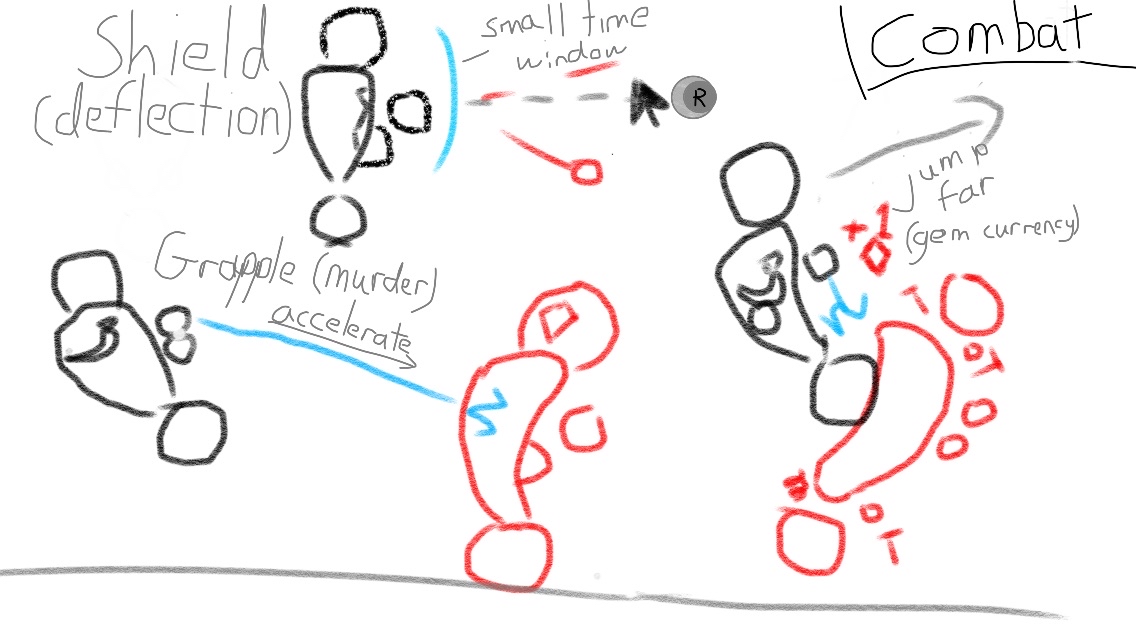
I also did sketches on how combat could play, which is mostly making use of the high-speed grappling hook. The AI of the enemies would patrol surfaces and mostly damage with projectiles, which you can avoid by timing a deflection.
Later in 2022, I implemented satisfying character movement without complex controls or behaviours. There is footage from this version on YouTube, and the collision physics has not changed much since then. In 2023, I revisted the project and added a high-speed grappling hook as well as some polish, without implementing any significant assets.
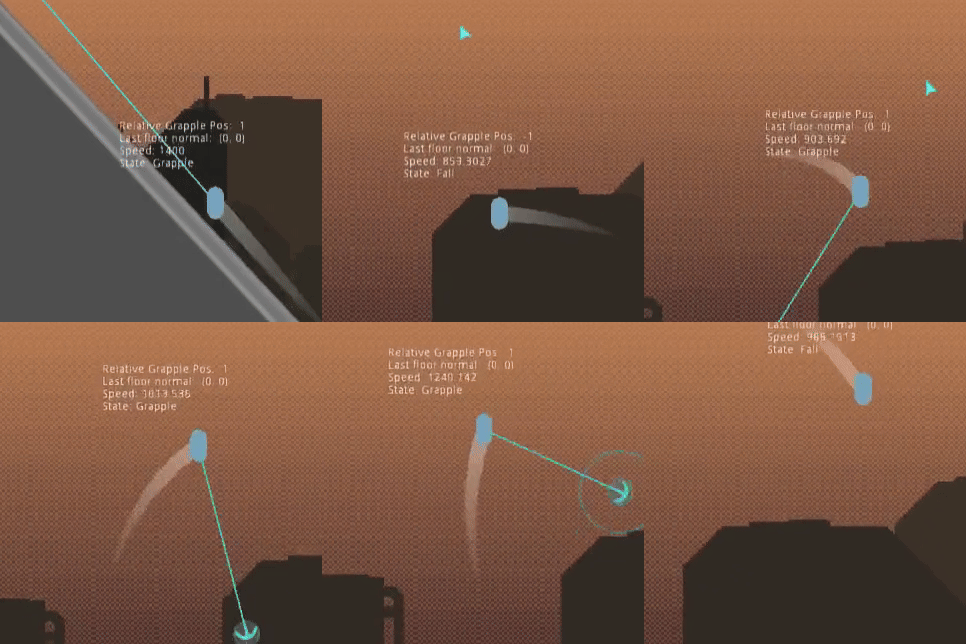
I decided to stray from the original grappling mechanic of jumping off of anything you pull yourself towards, because I found fun in more swing-like gameplay where gravity and air resistance are ignored while grappling.
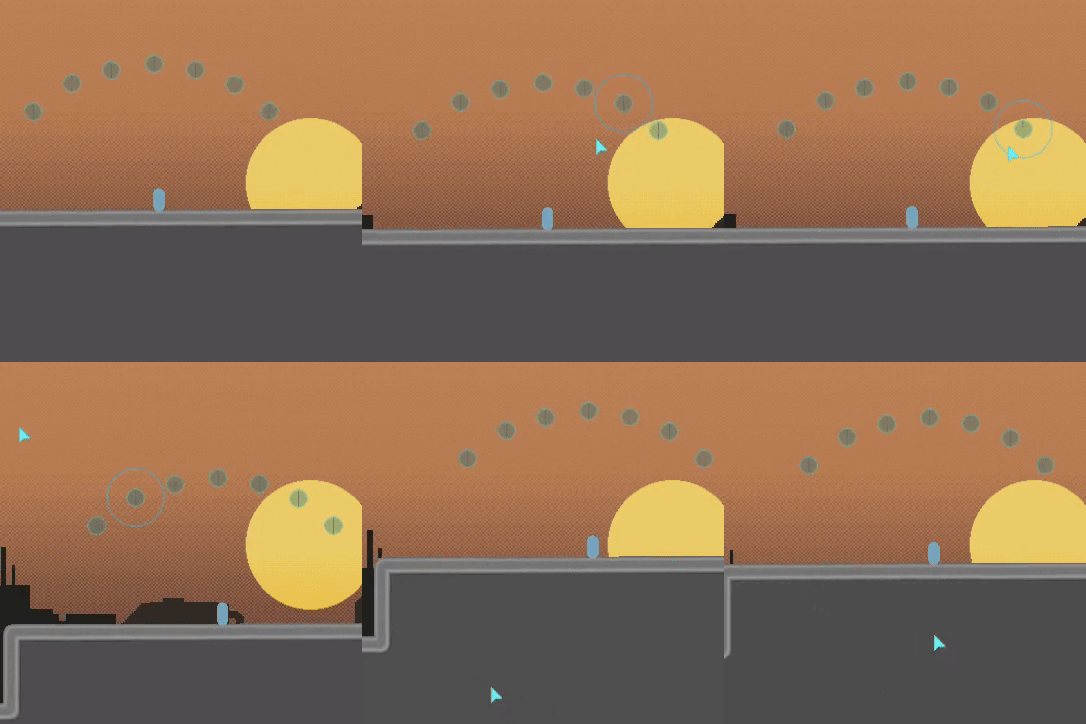
I implemented a robust grappling-node managing singleton to handle the grappling. It can easily be adjusted for controller sticks or gameplay with a cursor.
The motion trail behind the player is from a plugin by Oussama Boukhelf and the parallax background is by pixelfranek.
No Money To Burn
Score-chasing survival game
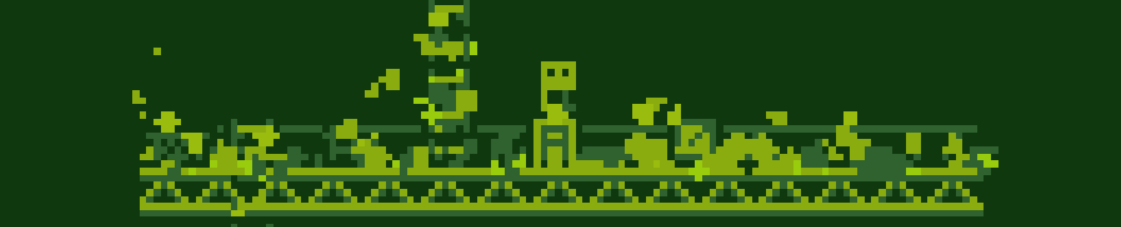
Collaborative game jam project from 2022, made in Godot with C#. I worked with a partner, @spavolk. Although we had some overlap in roles except for programming, I left the majority of the art and game design decisions to him. We collaborated on SFX.
The game jam was 72 hours, but we submitted a day late. This project involved a lot of cramming and is one of my most replayable and rounded game projects, considering it was made 100% from scratch with no external assets.
In terms of mechanics, the goal of the player is to survive as long as possible, but their score will only go up if they stop to save crates from the fire. By doing so, they risk their lives, but the more crates they save, the more lives they get. This makes for some risk-reward dynamics in the gameplay.
As time goes on, the fire becomes more and more frantic and difficult to escape. This creates an interesting dynamic of players getting as many crates as they can while things under control, so that they can survive as long as possible when things get impossible.
The obstacles are randomly placed and the crates are randomly distributed, which makes for some unfair situations for the player. However, because their score is meant to carry them through these difficult situations, this is intentional.
Goose Labyrinth
Movement-based puzzle game

Another 72-hour collaborative game jam project from 2022. I worked with a partner, @CenturionMC, who did not have experience with game development at the time, but was familiar with programming outside engines. We worked in gdscript because it is easier to prototype with and learn for my partner who mainly had experience in Python.
I taught him the basics of the engine and gdscript within the 72 hours and then took the lead on programming, art and animation. He took responsibility for level design and implementing the pause menu especially. We collaborated on choosing SFX and music, but none of it is of our own creation. Full credits are on the game page, where the game is downloadable and playable.
Mechanically, during each level, the player character has a certain amount of movement. The player can choose a direction to go, and the character will move in that direction until it can no longer. Slime puddles require 2 instead of 1 movement to move onto (though will only take 1 movement if you only have 1 left), and walls stop you dead in your tracks.
The goose spawns after a certain number of moves (different on each level) and has a greater movement than the player, but follows the path precisely. However, the goose is not limited to moving only one direction per turn and it has a greater movement. Because of this, the goose will keep catching up to the player character until it inevitably stabs them, politely.
Uplifted
Cleanly animated platforming prototype

An ambitiously planned collaborative project in 2022 that I did not initiate.
I was the only one who worked with the engine directly
and should have been solely responsible for programming.
 The soundtrack was made by a member of the team, Hollinj.
We had planned artists but they were not very involved, so
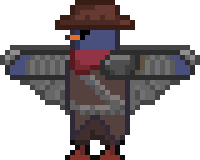
I decided to create my own character design from scratch, just to keep things moving, which ended up being the only art asset created for the project.
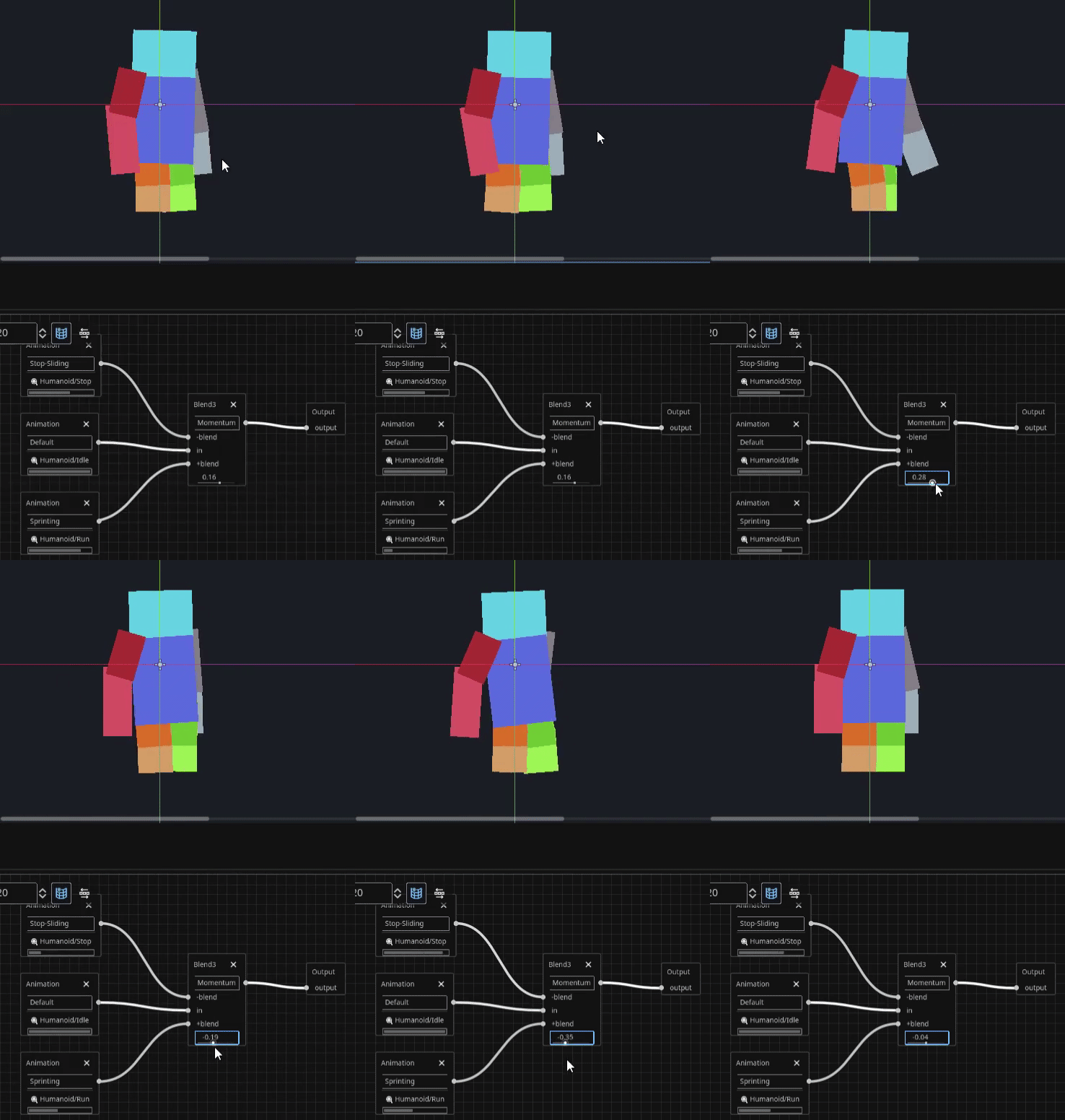
I created the rig and animated it in-engine, keeping layers of animation separate. This meant I was able to make generic humanoid animations and simply add some additional character-specific details with a blend tree.
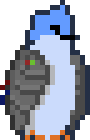 I also had a previous design before settling on this, but we decided on the more dangerous-looking design.
In 2024, I added a handful of terrain features (moving platforms and varying surfaces) to prototype the direction the game could have gone. I also discovered XML documentation for C# during this, which allowed me to spend some time documentating and planning the character controller very thoroughly.
Lanterns
Atmospheric light-based platformer

This is one of my first ambitious projects, which I undertook in 2020 when I was still actively learning how to use the engine.
There are two physics-enabled lanterns that alternate in which are visible when the player throws the lantern. One is connected with a physics joint to the player's hand while a line is rendered for a string, and the other is disconnected physically but has the correct forces applied the moment the lantern is released.
Raycasts are used to detect ledges for grabbing onto and steps that you can hop up. If I were to implement this again, I would've done so a bit differently.
The water shader is a heavily modified version of one that I found online but lost access to. Modifying this fragment-based shader and teaching myself the engine shader script showed me so much about how textures are rendered and gave me transferable skills that I have used in lesser degrees in future projects.
The character art, rig and animation was made from scratch. The hair contains 4 parts and each leg contains 3 parts (upper leg, lower leg, foot), which makes it time-consuming to animate. The background assets (modified) and the terrain spritesheet are from itch.io.
I also wrote and live-recorded tracks for this game in 2020 on keyboard. The idea was that the music was adaptive in intensity based on factors in the environment, but the game never got to that point. Originally, different levels of intensity were going to be layered, but because of intentional differences in tempo, it would have been unviable to sync.
Level 1
Level 2
I revisited the environment in 2024, improved the lantern physics and added the ability to have it return to the player's hand automatically.